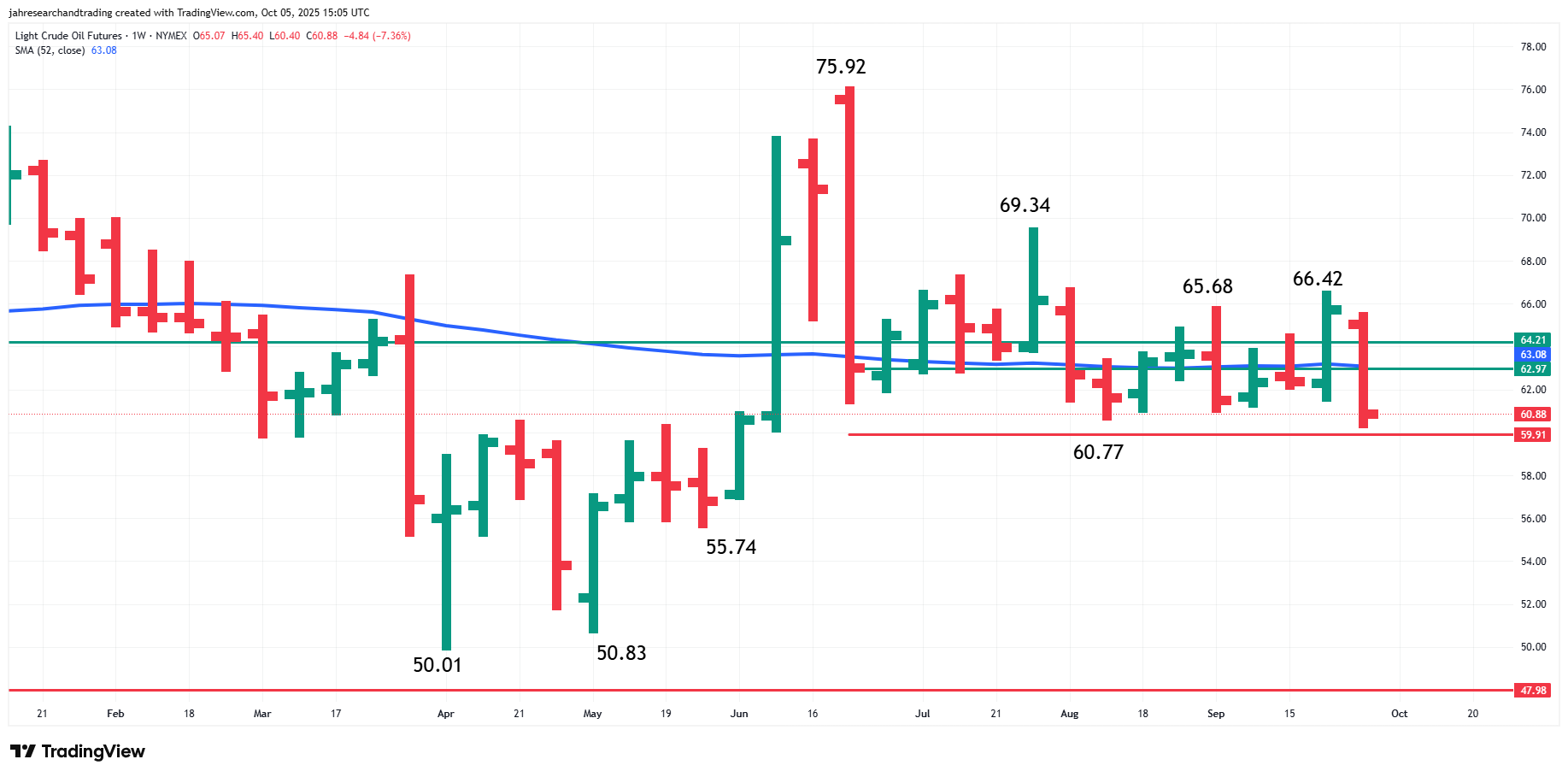



 Light crude oil futures suffered their worst weekly loss in over three months, with WTI settling at $60.88, down $4.84 or 7.36%. A confirmed break below the 52-week moving average and long-term pivot support triggered technical selling, while persistent fears of oversupply and weakening demand cemented a bearish outlook.
OPEC+ Output Hike Keeps Supply Glut Front and Center
The market remained under pressure throughout the week as traders reacted to ongoing developments from OPEC+. On Sunday, the group announced a 137,000 barrels per day increase in output for November—modest by volume but symbolically significant. The hike comes amid broader plans to unwind voluntary cuts and follows more than 2.7 million bpd added in 2024 alone.
Saudi Arabia had pushed for a steeper hike to accelerate market share recovery, while Russia favored a slower approach due to sanctions-related constraints. The result is a fractured group navigating a market already teetering on oversupply. Analysts at JPMorgan and Rystad now expect the oil market to remain in surplus through the fourth quarter.
WTI Breaks Below 52-Week Moving Average, Exposes Fibonacci Support
Last week’s bearish close below the 52-week moving average at $63.08 and the long-term pivot at $64.21 confirmed a shift in trend structure. The technical breakdown sets up a potential test of major Fibonacci support at $59.91. A weekly close beneath that level could expose the May 2024 low of $55.74 as the next downside target.
With long-term indicators now pointing lower, the weekly chart reflects a clear deterioration in bullish control.