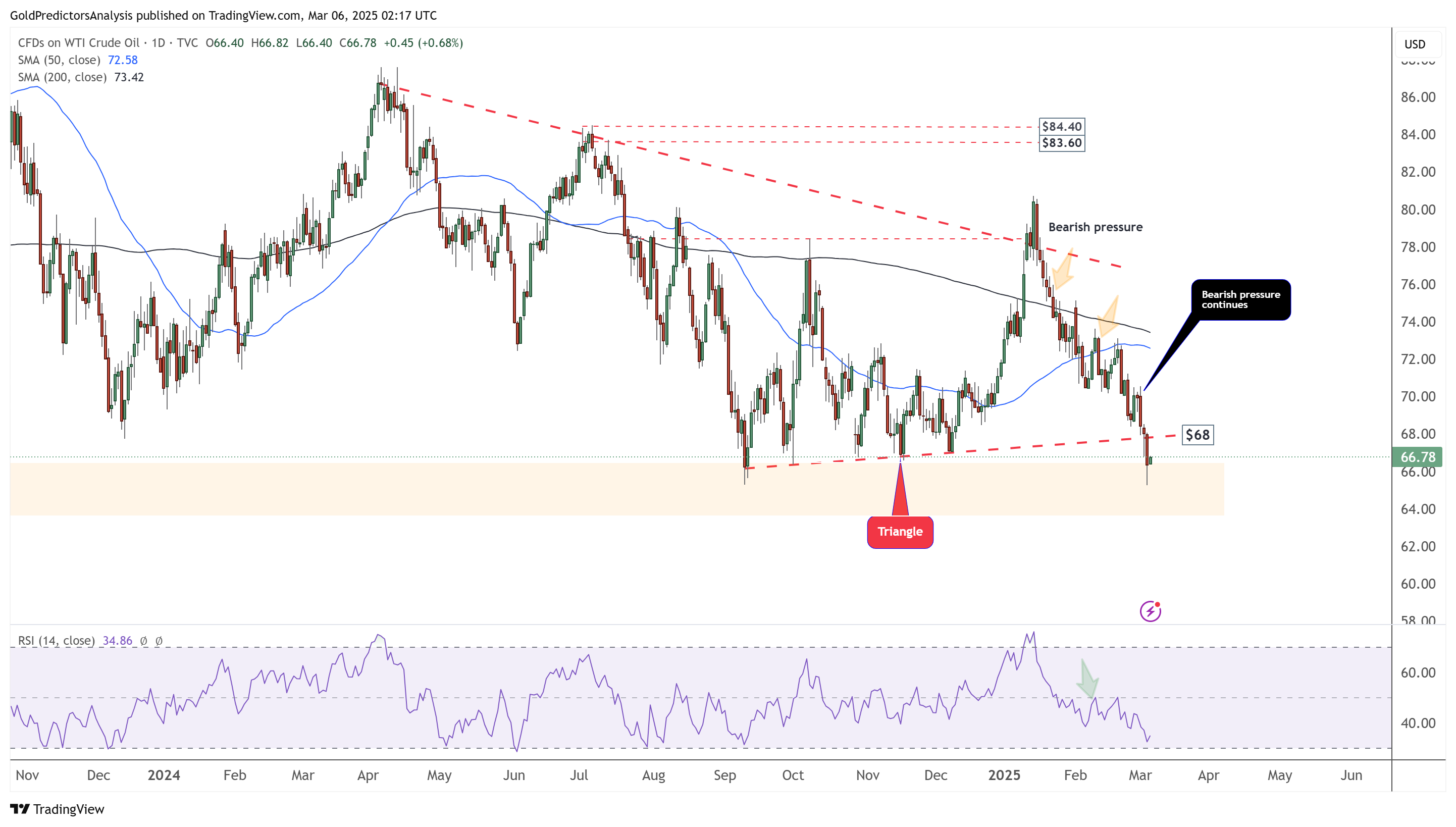



 WTI crude oil (CL) remains under bearish pressure and enters the long-term support zone around $66. The price has fallen to its lowest since December 2021. An unexpected rise in crude oil stockpiles weighs it down. The Energy Information Administration (EIA) reported a 3.614 million barrel increase in inventories for the week ending February 28. This rise far exceeded the expected decline of 290,000 barrels. This surplus supply has added to the bearish sentiment in the oil market.
Moreover, OPEC+ has decided to move forward with its planned production increase in April, further pressuring oil prices. This marks the first production hike by the group since 2022, increasing concerns about oversupply. Traders had anticipated a more cautious approach from OPEC+ amid growing demand uncertainties. This decision and rising US stockpiles have strengthened the bearish outlook for WTI crude oil.
On the other hand, trade tensions also add to the downside risks for the oil market. The recent US tariffs on Canadian, Mexican, and Chinese goods raise fears of slower economic growth, which could dampen crude demand. Trump confirmed the tariffs would take effect on Tuesday, though automakers received a temporary exemption. The uncertainty surrounding these measures has created additional headwinds for WTI crude oil, as traders worry about reduced industrial activity and energy consumption.
Oil Daily Chart – Bearish Pressure
The daily chart for WTI crude oil shows that the price challenges the long-term support band. A break below this zone will likely sustain the downward trend. The break of $68 has disrupted the triangle pattern. The orange zone highlights the $63-$66 range as the long-term support zone.
However, the overall direction after the break of $68 remains bearish. However, the RSI is approaching the oversold region, which indicates a rebound in the oil market from these levels.