



 On July 5, eight OPEC+ members announced a combined 548,000 barrels per day (bpd) increase in output for August—well above market expectations.
The move marked a clear step in unwinding voluntary cuts, underpinned by OPEC’s belief in “low inventories” and a “steady global economic outlook.”
The group reaffirmed its 1.3 million bpd demand growth forecast through 2026 and emphasized long-term market strength during the OPEC Seminar in Vienna.
Crucially, OPEC’s approach remains flexible, with provisions to reverse supply additions if conditions weaken.
For traders, this suggests the cartel sees continued demand resilience and is willing to test the market’s capacity to absorb more barrels.
EIA Expects Inventory Builds and Price Pressure
In contrast, the U.S. Energy Information Administration’s July 8 report warned of growing oversupply.
The agency forecasted global inventory builds of 0.8 million bpd in 2025, implying that production would exceed consumption even amid geopolitical tensions.
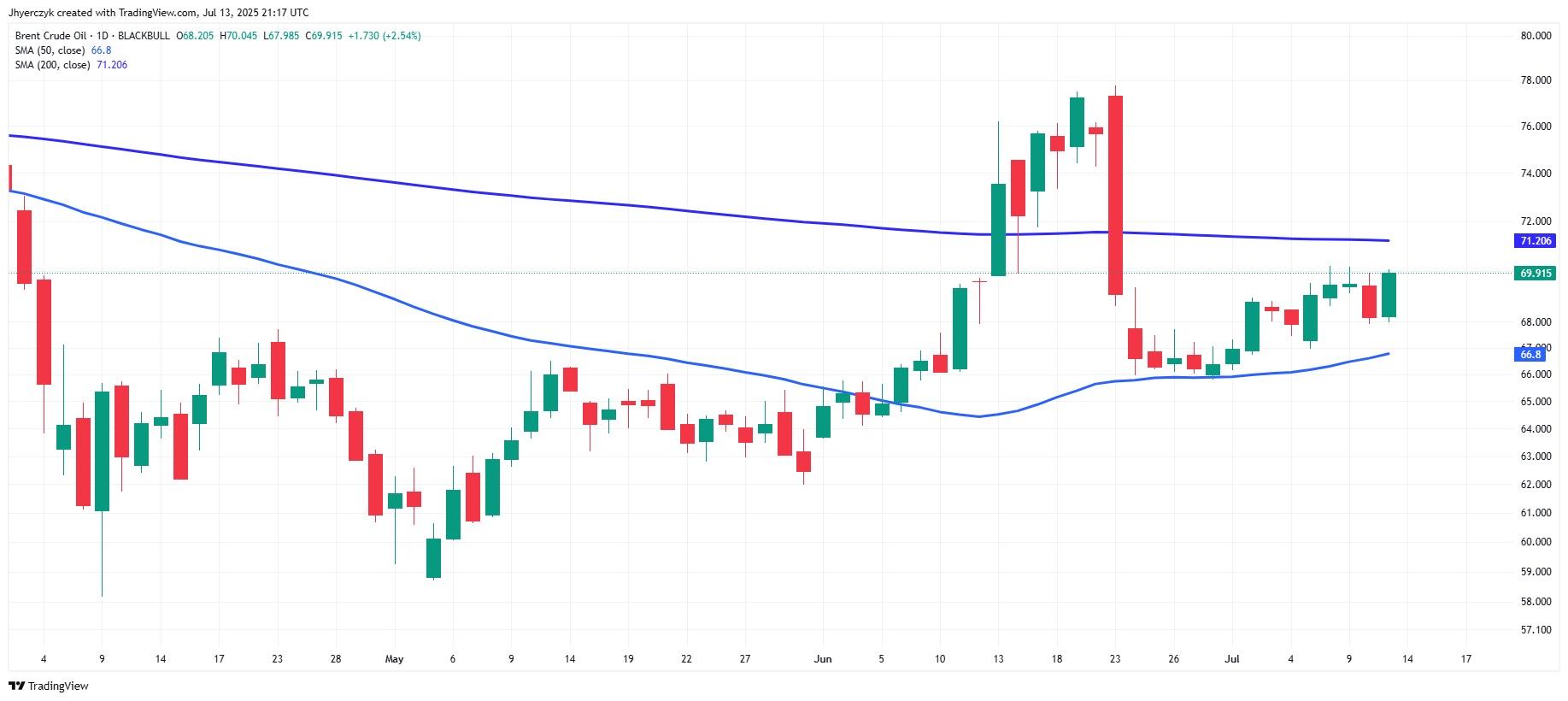
While the EIA nudged up its Brent crude forecast to $69 per barrel for 2025, it sees prices retreating to $58 in 2026.
The report also flagged signs of a U.S. production plateau, with output peaking above 13.4 million bpd in Q2 2025 but expected to decline into 2026.