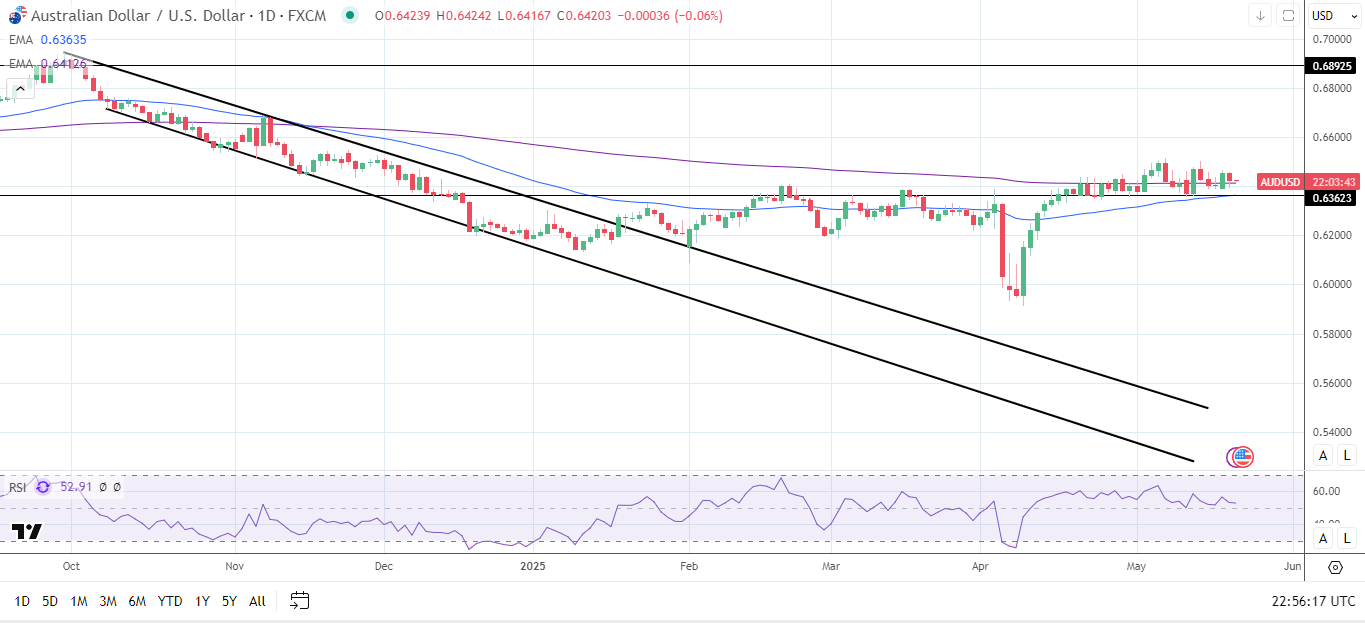



 On May 23, US-China trade developments and policy news from Beijing will influence AUD/USD trends. RBA Governor Michele Bullock recently underscored the threat of a trade war. She stated on May 20 that such conflict could push Australia into recession. She also warned:
“Australia’s economy could easily be compromised if a trade war between the US and China escalates… The market path is reflecting a possibility of a really bad outcome, pointing to a lower RBA cash rate.”
Renewed US-China tensions could impact Aussie dollar demand on recession fears, dragging AUD/USD lower. However, Beijing may counter with fresh stimulus, targeting domestic demand and consumption. Improving demand may drive AUD/USD higher, given China accounts for one-third of Aussie exports and Australia’s high trade-to-GDP ratio.
Aussie Dollar Daily Outlook: Fed Impact and Home Sales Data
The USD side of the equation will also influence AUD/USD later today. Weak US housing data may boost Fed rate cut bets, narrowing the US-Aussie interest rate differential in favor of the AUD. A more dovish Fed could send AUD/USD above the 200-day EMA toward $0.6450 and the May 7 high of $0.65144. On the other hand, strong data may widen the rate differential, dragging AUD/USD toward the 50-day EMA and the $0.63623 support level.