


 Oil Prices Face Bullish Jolt as U.S. Strikes Trigger Iran Retaliation Risk
Crude oil markets are bracing for a volatile open Sunday evening after the United States launched direct strikes on Iranian nuclear facilities over the weekend. The targeted attacks on Fordow, Natanz, and Isfahan mark a significant escalation, prompting analysts to reevaluate crude oil forecasts as markets prepare for a potential Iranian response and regional fallout.
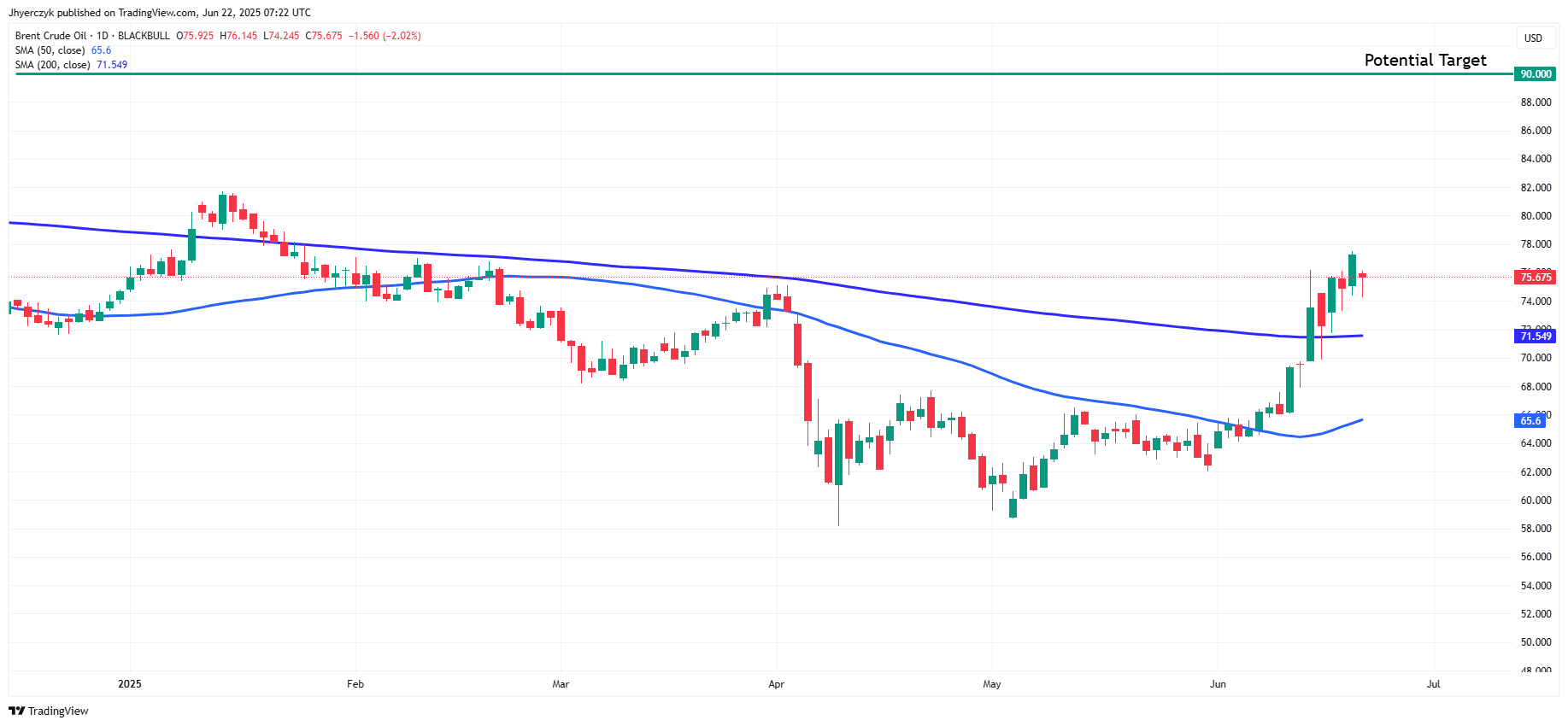
Initial electronic trading is expected to reflect a sharp upside “knee-jerk” reaction in oil futures. WTI resumes trading at 22:00 GMT Sunday, offering the first pricing window post-attack. Oxford Economics previously projected Brent could spike to $130 in an extreme scenario involving a full Iranian supply shutdown and Strait of Hormuz closure—an outcome that now seems increasingly plausible.
OPEC and Strait of Hormuz at Center of Volatility Risks
The biggest wildcard remains Iran’s next move. If Tehran retaliates militarily or disrupts the Strait of Hormuz—a conduit for 20% of global oil—analysts expect Brent to break above $120, potentially hitting $130. Regional U.S. military assets and oil infrastructure in Iraq, Saudi Arabia, and the UAE could become targets. The threat of asymmetric warfare, including drone and cyberattacks, is likely to prompt investors to hedge aggressively.
Conversely, if Iran opts for diplomatic de-escalation, oil prices could retrace. This hinges on signals that the U.S. strikes were a “one-off” and China’s economic leverage over Tehran encouraging restraint. Under this scenario, analysts expect Brent to stabilize between $65–$70, with a lingering $5–$8 risk premium baked in.