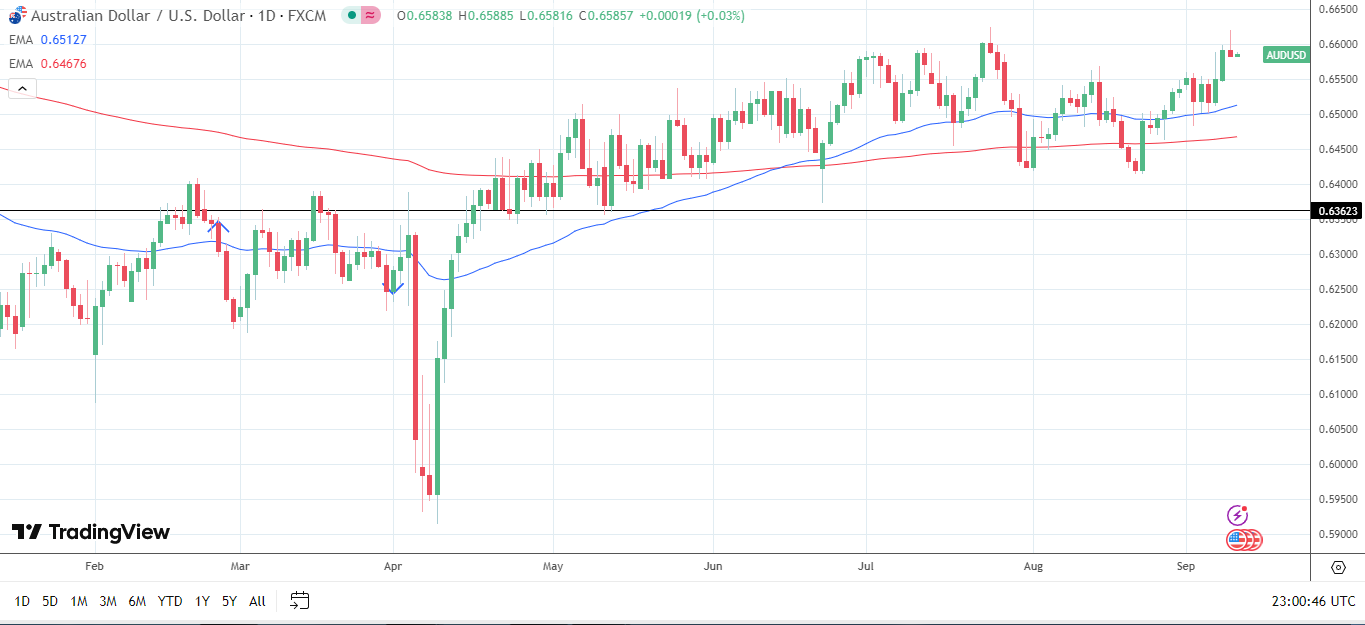



 Shifting focus to the AUD/USD pair, China’s August consumer and producer prices will be under the spotlight. Economists forecast consumer prices to fall 0.2% year-on-year in August after stalling in July. A return of deflationary pressures would signal a weakening demand backdrop, weighing on the Aussie dollar. Conversely, a surprise increase in consumer prices could lift appetite for the Aussie dollar.
While consumer price trends are crucial, producer prices will also be key.
Economists expect producer prices to fall 2.9% year-on-year after sliding 3.6% in July. A better-than-expected reading may signal a pickup in demand. Producers typically raise prices as demand improves, passing rising costs on to consumers.
As a leading inflation indicator, a less marked drop in producer prices may ease deflationary pressures in the months ahead. However, a larger-than-expected fall may fuel concerns about demand.
While economists are betting on a Q4 RBA rate cut, traders expect a more dovish Fed rate path through the fourth quarter.
Softer producer prices could raise bets on Q4 Fed rate cuts. A more dovish Fed rate path would narrow the US-Aussie interest rate differential in favor of the Aussie dollar. Under this scenario, the AUD/USD pair may rise toward the $0.6650 level.
Conversely, a higher print may support a less dovish Fed policy stance. Reducing bets on policy easing in Q4 would widen the rate differential, pushing AUD/USD toward the $0.6550 level. If breached, the 50-day EMA would be the next key technical support level.