


 BoJ Policy Stance, JGB Yields, and Yen Carry Trade Unwind Risks
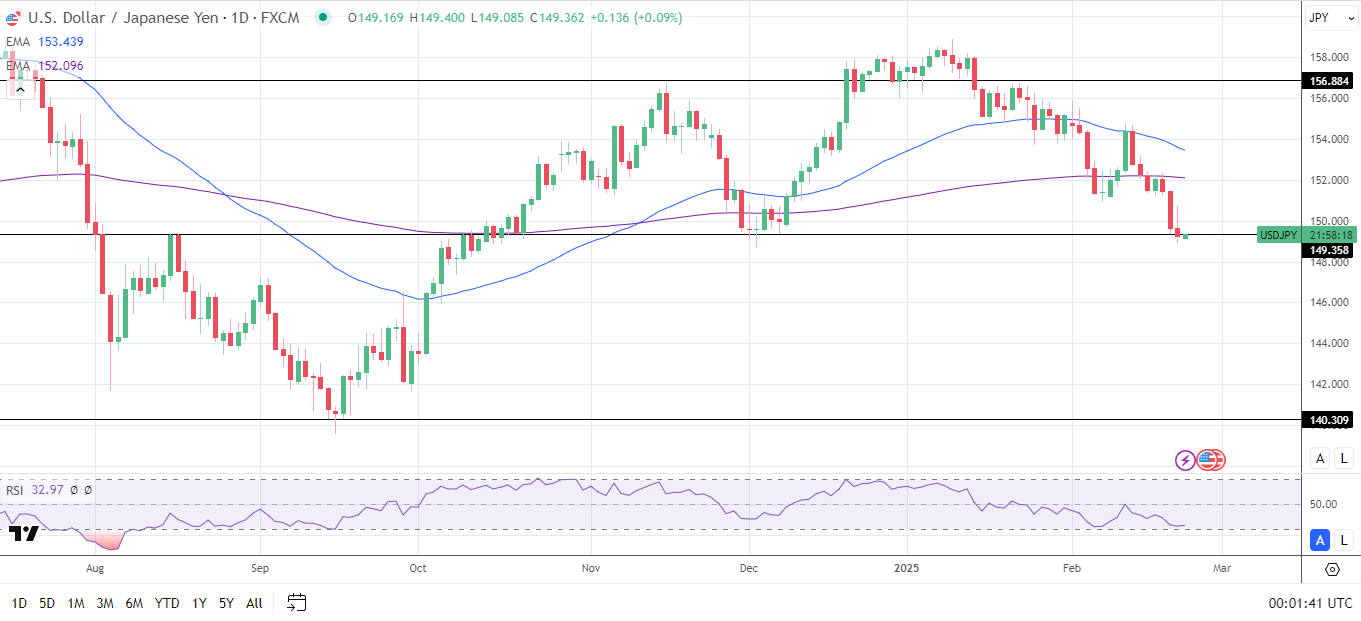
Last week, the USD/JPY pair dropped below 149 amid increasing speculation about a second Bank of Japan rate hike. Bank of Japan Governor Kazuo Ueda reacted to a surge in Japanese Government Bond (JGB) yields on February 21, hinting at a potential intervention to curb rising yields.
A BoJ intervention could widen the US-Japan interest rate differential, favoring the US dollar. JGB yields climbed to 15-year highs in response to accelerating consumer price inflation. However, after Governor Ueda’s comments, JGB yields pulled back, and the USD/JPY rebounded from a February 21 low of 148.919.
Sharp rises in JGB yields could trigger another Yen Carry Trade unwind, potentially causing market disruption.
On Monday, February 24, traders should closely monitor JGB yield trends and BoJ commentary. Another yield spike could prompt BoJ warnings, potentially weighing on Japanese Yen demand.
BCR Market Insights commented on recent Yen trends and the potential for another Yen Carry Trade Unwind:
“Yen best performing G10 currency so far this year – up almost 5%. Valid reasons for this – The BOJ is the only major CB globally that is hiking rates. Next hike looks like May. Could yen carry trade unwind happen again? Mite be wise to keep an eye on the yen!”
Beyond USD/JPY trends, the Nikkei Index could also give early Yen Carry Trade unwind signals. Market analyst Jesse Colombo stated:
“If the Nikkei closes below the 37,000-38,000 support, that would confirm that the yen carry trade is unwinding again and would spook the global financial markets.”
The Nikkei closed at 38,777 on February 21.
Shifting to the US session, the Dallas Fed Manufacturing Index and Chicago Fed National Activity Index will be in focus.
US data to influence the Fed rate path.
Upward trends in the respective Indexes could ease fears of a sharp US economic slowdown, boosting US Dollar demand. Investors may lower bets on an H1 2025 Fed rate cut, potentially driving the USD/JPY pair toward 152 and the 200-day Exponential Moving Average (EMA).
Conversely, weaker readings could heighten speculation of a near-term Fed move, potentially pulling the pair below 148.