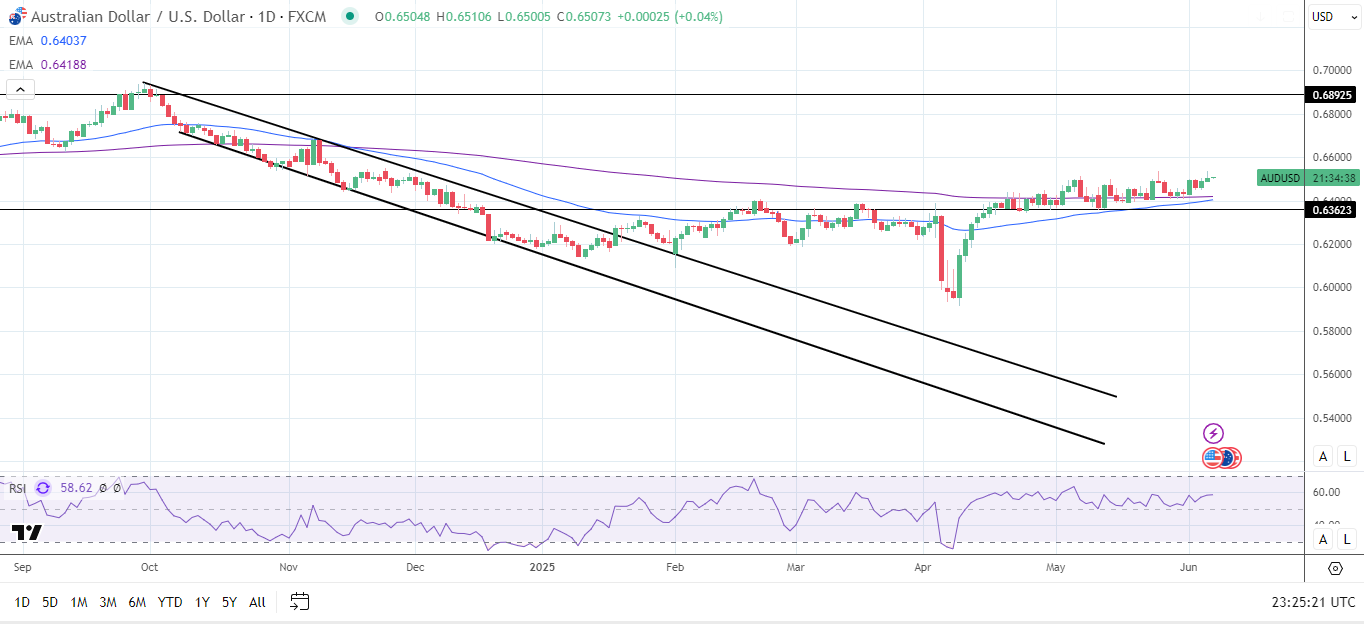



 Meanwhile, Aussie housing data on June 6 may influence AUD/USD trends. According to preliminary data, housing approvals jumped 3.1% month-on-month in April after falling 1.9% in March. Meanwhile, building permits slid 5.7% following a 7.1% slump in March.
A rebound in house approvals could support a rebound in building permits and rising demand for new builds. However, building permit trends remain crucial as not all approved developments proceed to construction.
Increased housing supply could dampen housing services inflation, supporting a more dovish RBA rate path and dragging AUD/USD toward $0.6450. Conversely, weakening supply may drive rents higher, potentially fueling inflation. In this scenario, the RBA could take a less dovish rate path, driving AUD/USD toward $0.6550.
Later today, US labor market data will drive US-Aussie interest rate differentials and AUD/USD. A stronger-than-expected US Jobs Report would temper Fed rate cut bets and widen the US-Aussie interest rate differential in favor of the US dollar. A widening rate differential may push AUD/USD below $0.6450 toward the 200-day and 50-day EMAs.
Conversely, weaker data may narrow the rate differential and drive AUD/USD above $0.6550 toward $0.66.
Beyond the economic data, Fed commentary and trade headlines will continue to fuel AUD/USD volatility.