


 Progress in negotiations may soften tariff concerns and boost demand, supporting the Aussie. With China absorbing one-third of Australia’s exports, rising Chinese demand could improve the outlook for the trade-driven Aussie economy. However, stalled talks may shift focus to Chinese stimulus. Fresh stimulus targeting domestic demand and consumption may also bolster Aussie dollar demand.
Nevertheless, while stimulus may boost sentiment, a resolution to trade tensions could deliver a stronger and more sustained rally.
Recent inflation data fueled speculation about a May rate cut and four additional reductions by year-end. Shane Oliver, Head of Investment Strategy and Chief Economist at AMP, commented on the RBA’s policy outlook:
“Aust Melb Institute Inflation Gauge for Apr ticked up to 3.3%yoy possibly reflecting the roll off of electricity rebates. Trimmed mean inflation also ticked up but remains ~2%yoy & points to more downside for the ABS qtrly trimmed mean which fell to 2.9%yoy in the Mar qtr.”
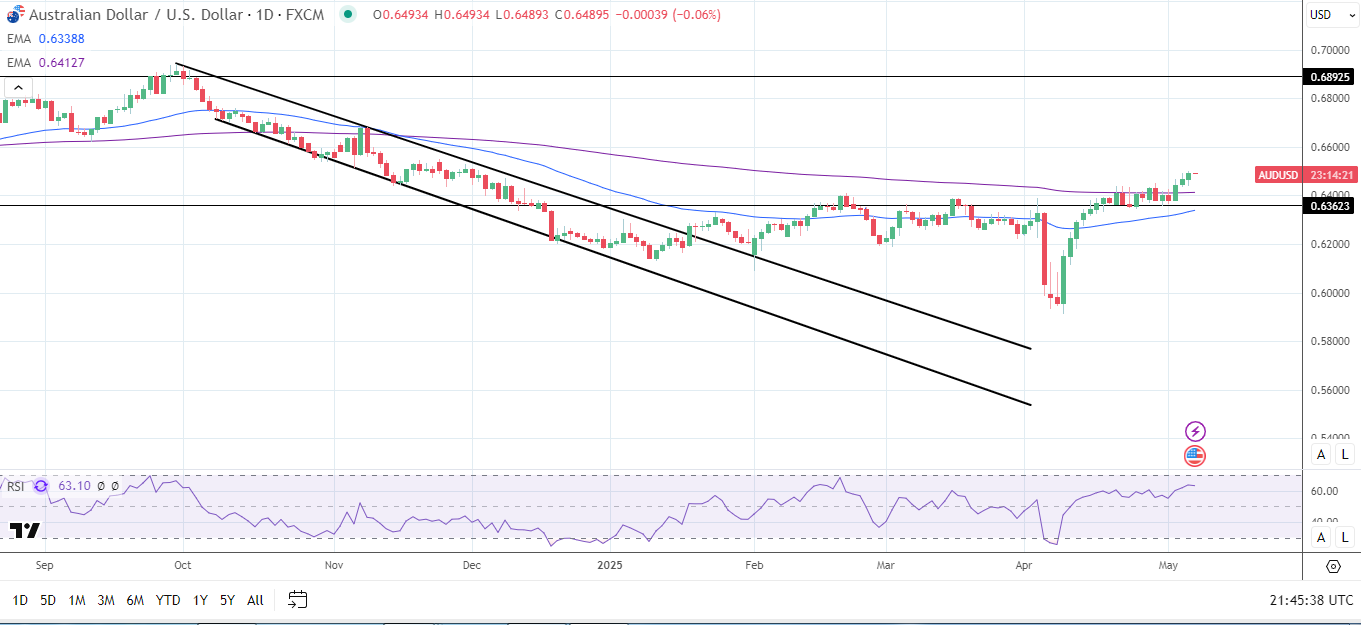
In the US session, Fed Chair Powell will take the spotlight. If the Fed holds rates at 4.5% and calls for policy status quo on tariff uncertainty, the rate differential could widen. Fading bets on multiple Fed rate cuts may send the AUD/USD pair below the 200-day EMA toward the $0.63623 support level.
However, a dovish policy outlook may narrow the rate differential, potentially driving the pair above $0.65.