


 Meanwhile, Australian household spending trends could affect AUD/USD price trends and the RBA rate path. Total household spending rose 0.1% month-on-month in April.
A pickup in spending could bolster the Aussie economy and fuel demand-driven inflation. An improving economic backdrop and rising inflation may temper bets on RBA rate cuts, boosting Aussie dollar demand.
Conversely, a drop in household spending may dampen inflation, signaling a more dovish RBA policy stance. Rising expectations of multiple RBA rate cuts may soften demand for the Aussie, weighing on AUD/USD.
Later today, Fed speakers will dictate US-Australian interest rate differentials and AUD/USD trends.
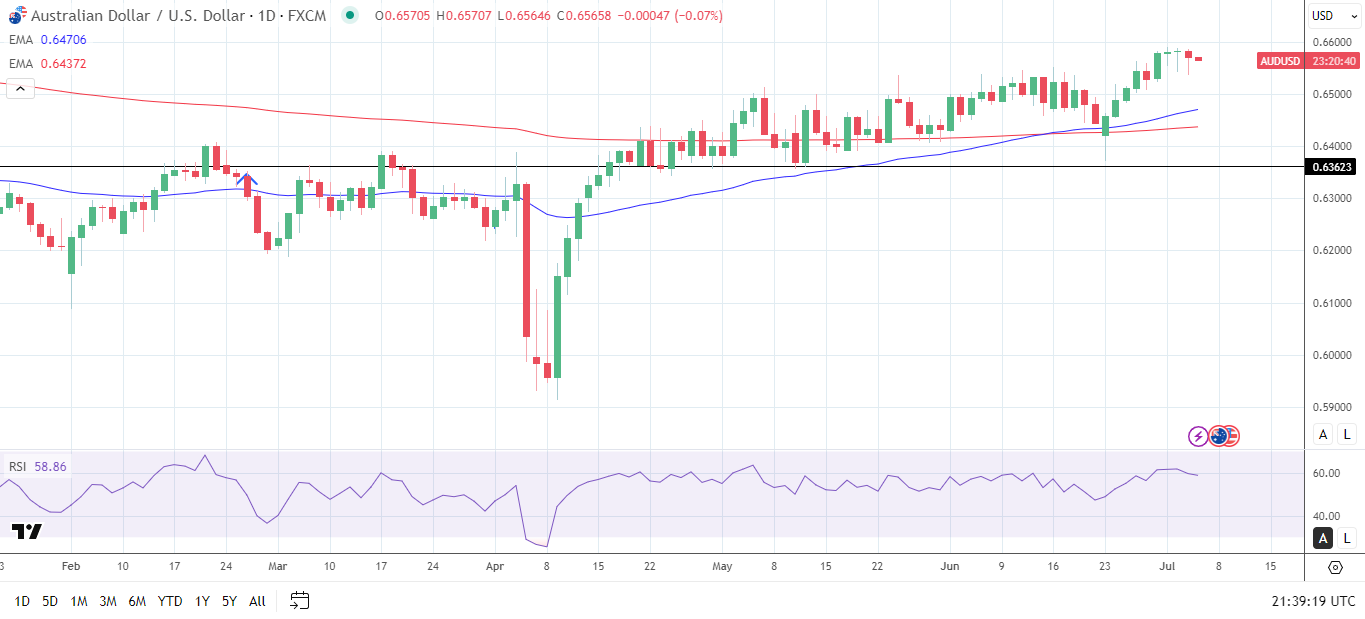
Dovish Fed rhetoric would narrow the rate differential, favoring the Aussie dollar, sending AUD/USD toward $0.66.
Conversely, hawkish Fed cues may widen the rate differential, favoring the US dollar. A wider rate differential, on expectations of fewer Fed rate cuts, might drag AUD/USD toward $0.65.